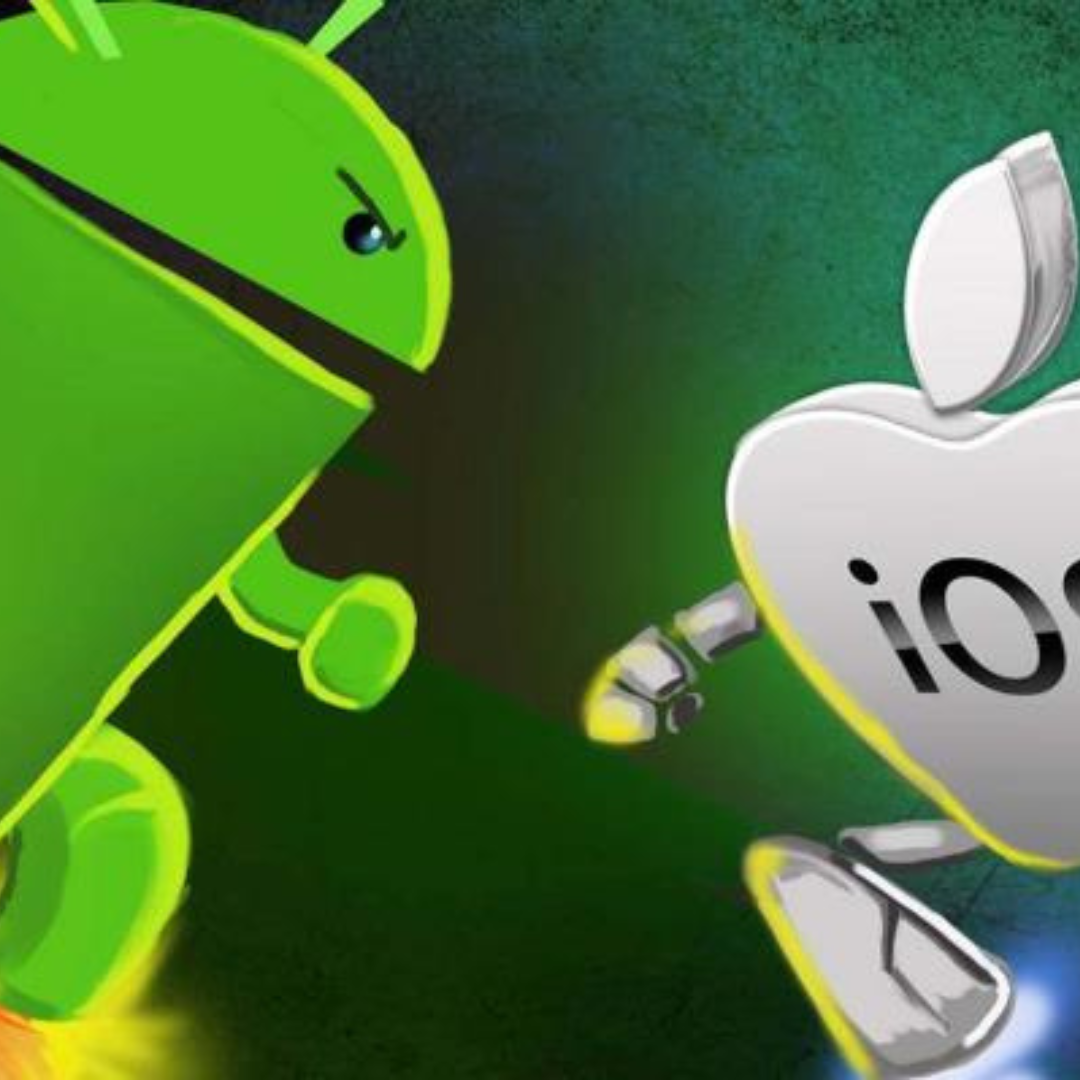
iOS VS ANDROID
Google's Android and Apple's iOS are helping frameworks utilized virtually in the convenient invention,
for example, cell phones and tablets. Linux-based Android and portion of the means open-source, is
more PC-like than iOS, in that its interface and important elements are by and huge additional flexible
beginning to complete. In any case, iOS' uniform plan factors are some of the time watched as being
more simple to understand. You ought to select your cell phone and tablet frameworks cautiously, as
altering from iOS to Android or the distinct way around will foresee you buying applications again in the
Google Play or Apple App Store. Android is presently the world's most usually utilized cell phone stage
and is utilized by a broad span of telephone producers. iOS is almost utilized on Apple gadgets, like the
iPhone.
Underneath, we experiment through the different viewpoints by which cell phone OSes can be assessed,
selecting a champ or declaring a tie for every class. Know that both are entire accumulated and
prominent works of programming now, and you're possibly not going to be disheartened with
whichever you decide on...
Hardware Choices
Your judgment of a gadget for running iOS versus Android is like the determination among macOS and
Windows PCs: With the Apple framework programming, you have a conclusion of only one equipment
seller, though a top-level one. With Android and Windows, you can search many equipment creators
with an enormous extent of importance, integrity, and performance levels. Since Android is open-source
(contrasted and iOS's shut source) it implies that any telephone producer can utilize it. Furthermore,
that has aroused an abundance of Android handsets.
WINNER - ANDROID
Interface and usability
It's adequate to say that Android will in widespread present greater intricacy—more tunneling down
menus to get to the setting you desire, several home screens, and more variation among various
telephone model interfaces. With iOS, as a finding of Apple's outstanding love of prohibiting clients to its
path of accomplishing things or ignore about it, interface layout and settings are more smooth and easy.
On account of iOS 14, however, you would now be eligible to amend your iPhone screen like never
before, with huge, all-around planned gadgets, the new App Library that accordingly gatherings and
coordinates symbols, and adaptable symbols. Android permits more customization alternatives than
iOS, notwithstanding, in any event, allowing you to pick among many launcher screens that change the
interface. Taking into account that Android is made by Google, it seems to be unique that the
competition work on iOS is prevalent.
WINNER - iOS
Technology support
New remote tech principles show up invariably like the spring bird relocation, and over the most current
couple of years, Android has been early to invite these new specs, quite often going before their iOS
assistance. Android is the initial with 5G organization assistance; beforehand it wins against Apple with
help for remote indicting, 4G LTE, and touchless voice orders. All things contemplated, Apple will in
general hesitation until the new invention is useful and dependable: For specimen, 5G assistance and
guaranteed velocities aren't everywhere. Indeed, you can purchase a handset that associates with 5G—
however, would you be qualified to pursue any 5G support of interface it to? Android has moreover
added support for foldable and dual-screen telephones, and since it's open-source, outsiders like
Microsoft can add usefulness to help gadgets like the forthcoming Surface Duo, an Android telephone
that highlights two-screens, each exhibiting custom-fitted substance, as obstructed to completely being
a solitary screen that traverses the two. Once more, these innovations haven't generally demonstrated
to be effective (most definitely) however there's no question that Android handsets are spearheading
them.
WINNER - ANDROID
Security and Privacy
Both portable working frameworks have good records and protect with regards to security, however
Android, being more open, has more vectors for malware to enter your telephone. Specifically,
applications are more inclined to get inconvenience Android, particularly if you introduce it from an
options application store.
WINNER - iOS
Camera and photos
Cell phone cameras—and possibly similarly as significantly, the photograph handling applications that
accompany the telephone OSes—have been a concentration for new cell phone and portable OS arrivals
of late. In one or the other framework, you can discover incredible camera alternatives (counting
different camera frameworks). Try not to get stalled in megapixels, in any case: Even however you can
discover Android telephones with super-high megapixel numbers—the Samsung Galaxy S20 can take
shots at an astounding 108 megapixels—that number is less significant than the plan of the camera
sensor. The two OSes likewise have great photograph improvement programming to make your photos
look shockingly better than the sensor and focal points are fit for without anyone else. Both can add
bokeh (foundation obscure) to a picture, and both deal slow movement, scene, low-light, and time-slip
by shooting. Android enlists some creative abilities not base on the stock iPhone camera application: It
allows you to take photograph circle 360-degree photographs, and its Google Lens allows you to look for
adjacent shopping just as interpret message and output records. It can likewise give outlining clues and
offers a low-light mode. Picture takers will see the value in that they can save crude camera records
from an Android telephone, while Apple expects you to utilize an outsider application that can save
crude camera documents, for example, the brilliant Adobe Lightroom application (accessible on the two
stages).
WINNER-ANDROID