
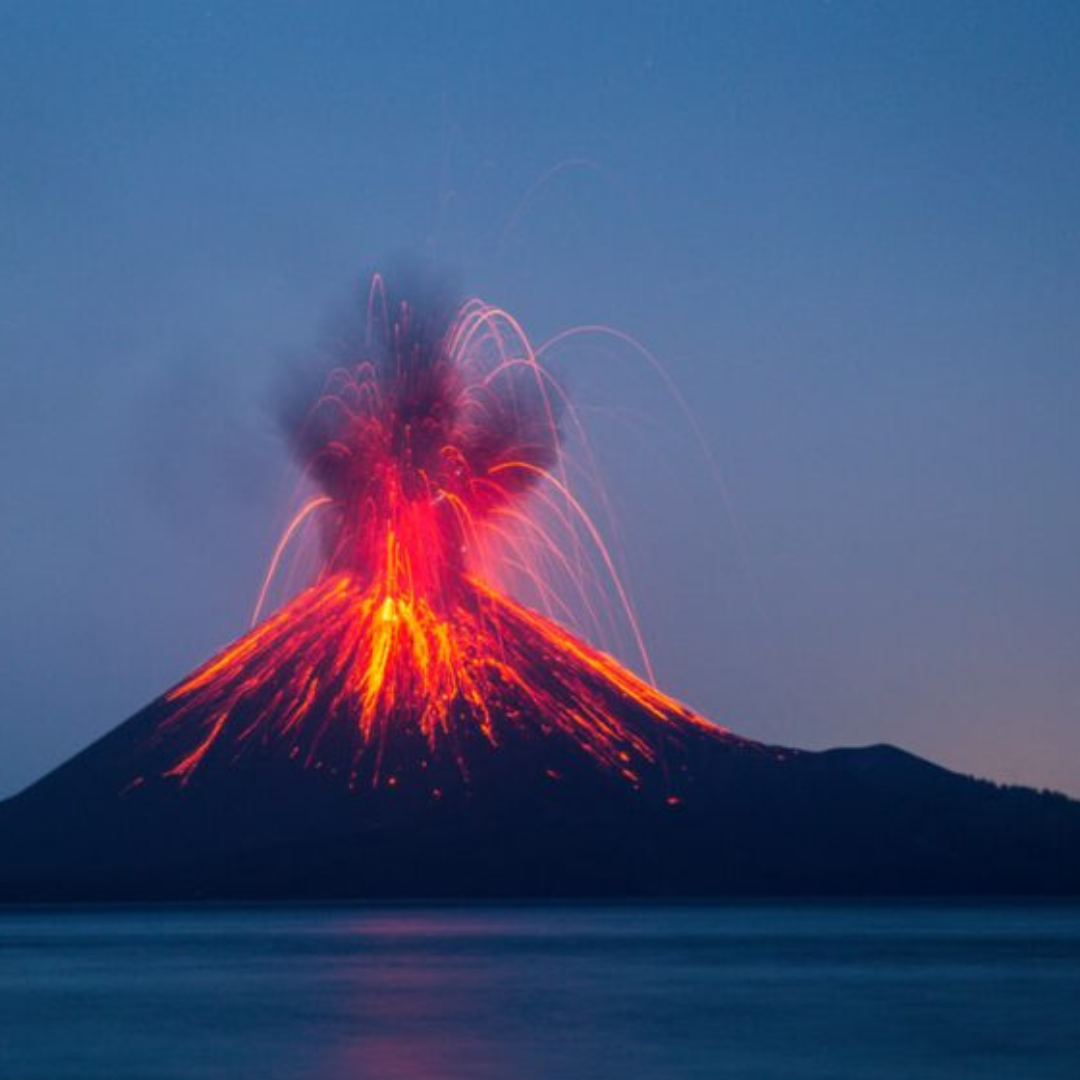
volcano
The volcano is a crack in a planetary-mass crust that permits hot lava, and gases to escape from a magma chamber under the surface, such as the planet Earth.The
Volcanoes are most frequently found on Earth when tectonic plates are diverging or either are converging, and the most of them are found underwater. For example, the divergent tectonic plates create volcanoes along a mid-ocean ridge
The most common image of a volcano is of a conical mountain with a crater at its peak spewing lava and deadly gases; however, this is only one of many forms of volcanoes. Volcanoes have far more sophisticated features, and their structure and behaviour are influenced by a variety of variables. Rather than a summit crater, some volcanoes have rocky peaks built by lava domes, while others have landscape features such as vast plateaus. Vents that eject volcanic material (such as lava and ash) and gases (mostly steam and magmatic gases) can occur anywhere on the landform, giving rise to lesser cones like Puu on Hawaii's Klauea's flank.
Cryovolcanoes (or ice volcanoes), which can be found on some of Jupiter's, Saturn's, and Neptune's moons, and mud volcanoes, which are structures that aren't always related with known magmatic activity. Except when the mud volcano is actually a vent of an igneous volcano, active mud volcanoes have far lower temperatures than igneous volcanoes.
Types of Volcanoes
1) Fissure Vents
The Fissure vents are the flat, linear fractures through which lava emerges.
2) Shield Volcano
The eruption of low-viscosity lava that may flow a long distance from a vent forms shield volcanoes, which are named for their broad, shield-like surfaces. They are characterised by comparatively gentle effusive eruptions rather than cataclysmic explosions. Shield volcanoes are more prevalent in marine than continental settings because low-viscosity magma is often low in silica. Shield cones are found throughout the Hawaiian volcanic system, and they are also frequent in Iceland.
3) Stratovolcanoes
Stratovolcanoes (composite volcanoes) are tall conical mountains made up of alternating layers of lava flows and tephra, thus the name. Stratovolcanoes are also known as composite volcanoes since they are formed from a variety of structures during eruptions. The ash produced by stratovolcanoes' explosive eruptions has historically presented the biggest volcanic threat to civilisation. The lavas of stratovolcanoes have a higher silica content and are hence significantly more viscous than shield volcano lavas.
4) SuperVolcano
A supervolcano is a volcano that has erupted multiple times and created more than 1,000 cubic kilometres (240 cubic miles) of volcanic deposits in a single explosive eruptions. The only volcanic product with volumes comparable to flood basalts is ash flow tuffs ejected by such eruptions.
A supervolcano may wreak havoc on a whole continent. Because of the massive amounts of sulphur and ash spewed into the atmosphere, such volcanoes can significantly lower global temperatures for many years after eruption.
VOLCANIC ACTIVITY
Individual volcanic systems have eruption recurrences ranging from several times a year to once every tens of thousands of years, depending on their level of activity. Volcanoes are classified as active, dormant, or extinct informally, but these words are not well defined.
1) Active Volcano
Volcanologists can't seem to agree on what constitutes a "active" volcano. When compared to the lifespans of humans or even civilizations, a volcano's lifespan can range from months to several million years, rendering such a distinction moot.Many of Earth's volcanoes, for example, have erupted dozens of times in the last few thousand years yet show no symptoms of erupting now. Volcanoes with such a lengthy lifespan are quite active. They are not, however, by human lifespans.
2) Dormant or Reactivated
It's tough to tell the difference between an extinct volcano and a dormant (inactive) volcano. Volcanoes that have not erupted in thousands of years but are likely to erupt again in the future are known as dormant volcanoes. Volcanoes are frequently assumed to be extinct if no written records of their activity exist. Volcanoes, on the other hand, might be inactive for a long time. Yellowstone, for example, has a repose/recharge duration of roughly 700,000 years, while Toba has a span of around 380,000 years.
3)Extinct
Scientists believe that extinct volcanoes are unlikely to erupt again since they no longer have a source of magma. Edinburgh Castle is perched atop Arthur's Seat, an extinct volcano in Scotland. It's not always easy to tell if a volcano is genuinely extinct.
explosive eruptions of high-silica lava (e.g., rhyolite), effusive eruptions of low-silica lava (e.g., basalt), pyroclastic flows, lahars (debris flows), and carbon dioxide emission are only a few examples of volcanic eruptions and associated activity. All of these actions can put people in danger. Volcanic activity is frequently accompanied by earthquakes, hot springs, fumaroles, mud pots, and geysers.Although volcanic eruptions can be dangerous to humanity, they have also provided valuable economic resources in the past. Volcanic ash and worn basalt combine to create some of the world's most fertile soil, rich in nutrients including iron, magnesium, potassium, calcium, and phosphorus.Volcanic activity causes precious mineral resources, such as metal ores, to be displaced.
">
volcano
The volcano is a crack in a planetary-mass crust that permits hot lava, and gases to escape from a magma chamber under the surface, such as the planet Earth.The
Volcanoes are most frequently found on Earth when tectonic plates are diverging or either are converging, and the most of them are found underwater. For example, the divergent tectonic plates create volcanoes along a mid-ocean ridge
The most common image of a volcano is of a conical mountain with a crater at its peak spewing lava and deadly gases; however, this is only one of many forms of volcanoes. Volcanoes have far more sophisticated features, and their structure and behaviour are influenced by a variety of variables. Rather than a summit crater, some volcanoes have rocky peaks built by lava domes, while others have landscape features such as vast plateaus. Vents that eject volcanic material (such as lava and ash) and gases (mostly steam and magmatic gases) can occur anywhere on the landform, giving rise to lesser cones like Puu on Hawaii's Klauea's flank.
Cryovolcanoes (or ice volcanoes), which can be found on some of Jupiter's, Saturn's, and Neptune's moons, and mud volcanoes, which are structures that aren't always related with known magmatic activity. Except when the mud volcano is actually a vent of an igneous volcano, active mud volcanoes have far lower temperatures than igneous volcanoes.
Types of Volcanoes
1) Fissure Vents
The Fissure vents are the flat, linear fractures through which lava emerges.
2) Shield Volcano
The eruption of low-viscosity lava that may flow a long distance from a vent forms shield volcanoes, which are named for their broad, shield-like surfaces. They are characterised by comparatively gentle effusive eruptions rather than cataclysmic explosions. Shield volcanoes are more prevalent in marine than continental settings because low-viscosity magma is often low in silica. Shield cones are found throughout the Hawaiian volcanic system, and they are also frequent in Iceland.
3) Stratovolcanoes
Stratovolcanoes (composite volcanoes) are tall conical mountains made up of alternating layers of lava flows and tephra, thus the name. Stratovolcanoes are also known as composite volcanoes since they are formed from a variety of structures during eruptions. The ash produced by stratovolcanoes' explosive eruptions has historically presented the biggest volcanic threat to civilisation. The lavas of stratovolcanoes have a higher silica content and are hence significantly more viscous than shield volcano lavas.
4) SuperVolcano
A supervolcano is a volcano that has erupted multiple times and created more than 1,000 cubic kilometres (240 cubic miles) of volcanic deposits in a single explosive eruptions. The only volcanic product with volumes comparable to flood basalts is ash flow tuffs ejected by such eruptions.
A supervolcano may wreak havoc on a whole continent. Because of the massive amounts of sulphur and ash spewed into the atmosphere, such volcanoes can significantly lower global temperatures for many years after eruption.
VOLCANIC ACTIVITY
Individual volcanic systems have eruption recurrences ranging from several times a year to once every tens of thousands of years, depending on their level of activity. Volcanoes are classified as active, dormant, or extinct informally, but these words are not well defined.
1) Active Volcano
Volcanologists can't seem to agree on what constitutes a "active" volcano. When compared to the lifespans of humans or even civilizations, a volcano's lifespan can range from months to several million years, rendering such a distinction moot.Many of Earth's volcanoes, for example, have erupted dozens of times in the last few thousand years yet show no symptoms of erupting now. Volcanoes with such a lengthy lifespan are quite active. They are not, however, by human lifespans.
2) Dormant or Reactivated
It's tough to tell the difference between an extinct volcano and a dormant (inactive) volcano. Volcanoes that have not erupted in thousands of years but are likely to erupt again in the future are known as dormant volcanoes. Volcanoes are frequently assumed to be extinct if no written records of their activity exist. Volcanoes, on the other hand, might be inactive for a long time. Yellowstone, for example, has a repose/recharge duration of roughly 700,000 years, while Toba has a span of around 380,000 years.
3)Extinct
Scientists believe that extinct volcanoes are unlikely to erupt again since they no longer have a source of magma. Edinburgh Castle is perched atop Arthur's Seat, an extinct volcano in Scotland. It's not always easy to tell if a volcano is genuinely extinct.
explosive eruptions of high-silica lava (e.g., rhyolite), effusive eruptions of low-silica lava (e.g., basalt), pyroclastic flows, lahars (debris flows), and carbon dioxide emission are only a few examples of volcanic eruptions and associated activity. All of these actions can put people in danger. Volcanic activity is frequently accompanied by earthquakes, hot springs, fumaroles, mud pots, and geysers.Although volcanic eruptions can be dangerous to humanity, they have also provided valuable economic resources in the past. Volcanic ash and worn basalt combine to create some of the world's most fertile soil, rich in nutrients including iron, magnesium, potassium, calcium, and phosphorus.Volcanic activity causes precious mineral resources, such as metal ores, to be displaced.